If you are managing a bridge demolition, offshore platform decommissioning, or port renovation project, you already know that underwater pile cutting is one of the most dangerous and technically demanding tasks on your schedule. Sending divers into murky, fast-flowing water to manually cut steel-reinforced concrete piles is not just risky — it is expensive, slow, and increasingly difficult to justify from a safety standpoint. This guide walks you through a modern, diver-free underwater pile cutting solution that helps you complete pile removal faster, safer, and more economically.
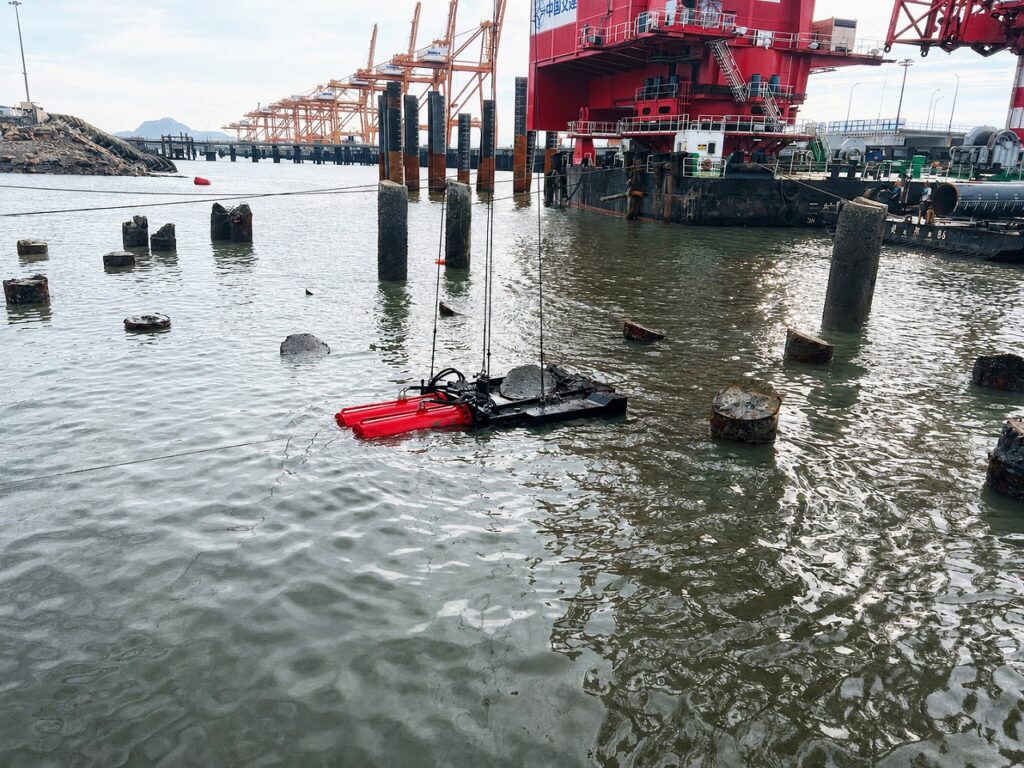
The Problem: Why Traditional Underwater Pile Cutting Fails You
When you rely on traditional methods for underwater pile removal, you are dealing with a cascade of problems:
Safety hazards: Divers must work in low-visibility, high-current environments with cutting tools — a combination that accounts for a disproportionate share of marine construction accidents.
High costs: You need a dive team, support crew, safety boats, and extended barge rental time. Every hour of delay multiplies your daily operational costs.
Weather and tide dependency: Divers can only work in narrow weather and tidal windows, meaning your schedule is at the mercy of nature.
Inconsistent cut quality: Manual underwater cutting produces uneven cuts that may fail engineering inspections and require costly rework.
Environmental risks: Traditional methods can generate debris, slag, and pollutants that contaminate surrounding water.
If any of these pain points sound familiar, you need a fundamentally different approach.
The Solution: Hydraulic Underwater Pile Cutter Technology
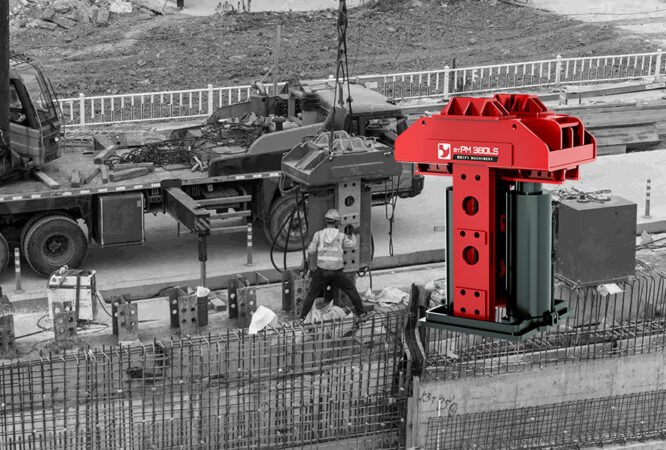
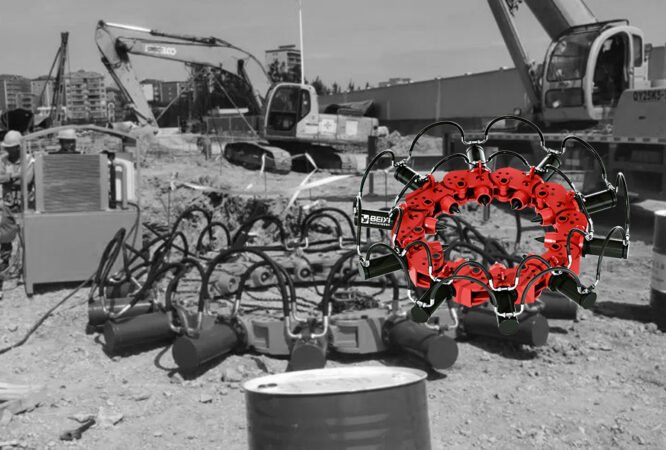
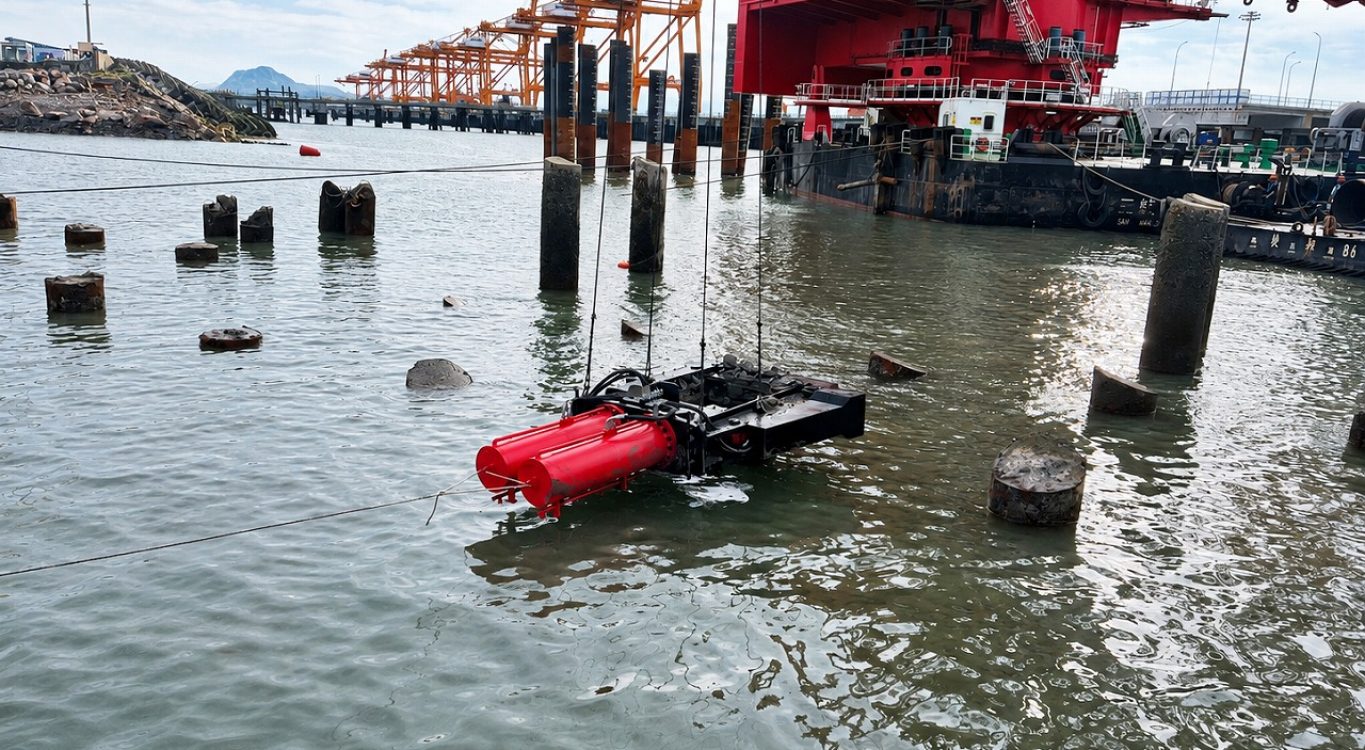
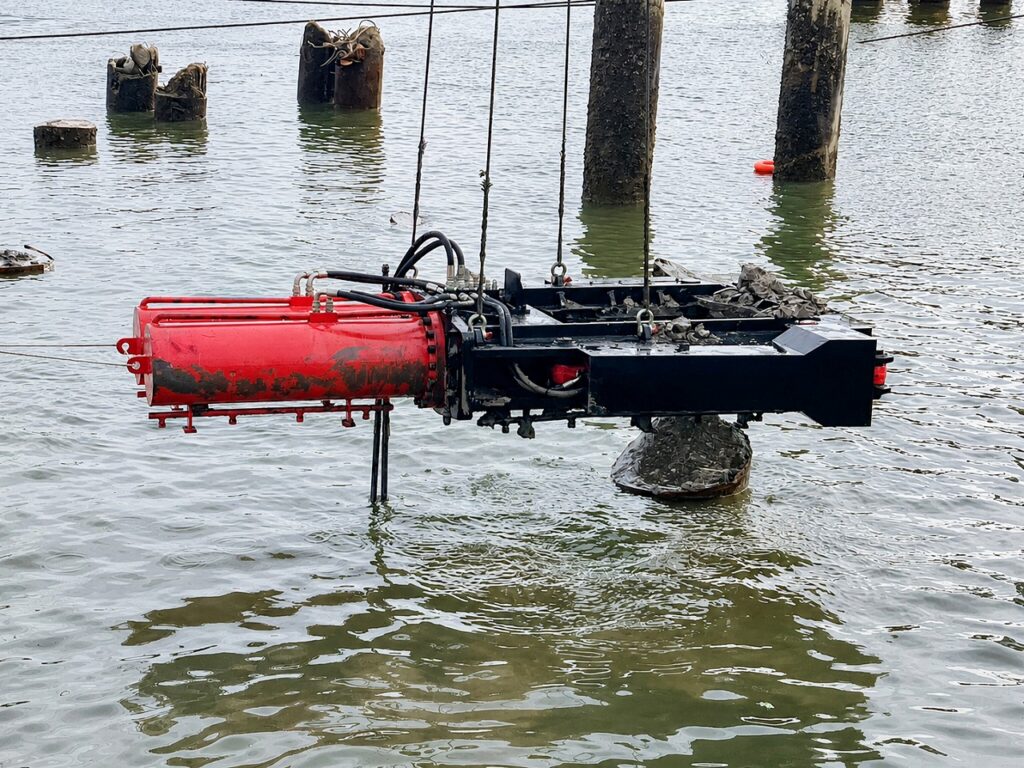
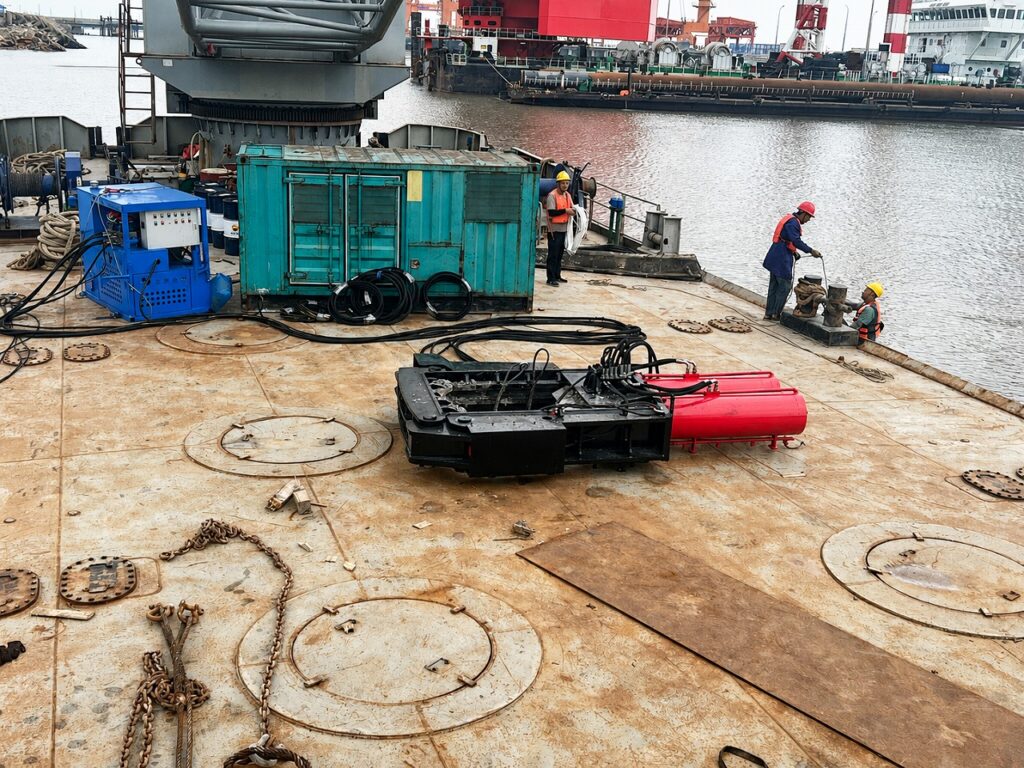
A hydraulic pile cutting machine like the BeiYi BYQ-600S is purpose-built to eliminate every one of these problems. Instead of sending a person underwater, you send a machine. The hydraulic pile cutter uses a powerful blade system driven by a 22 kW hydraulic power station that delivers up to 600 KN of crushing force — enough to slice through reinforced concrete and steel rebar in a single pass.
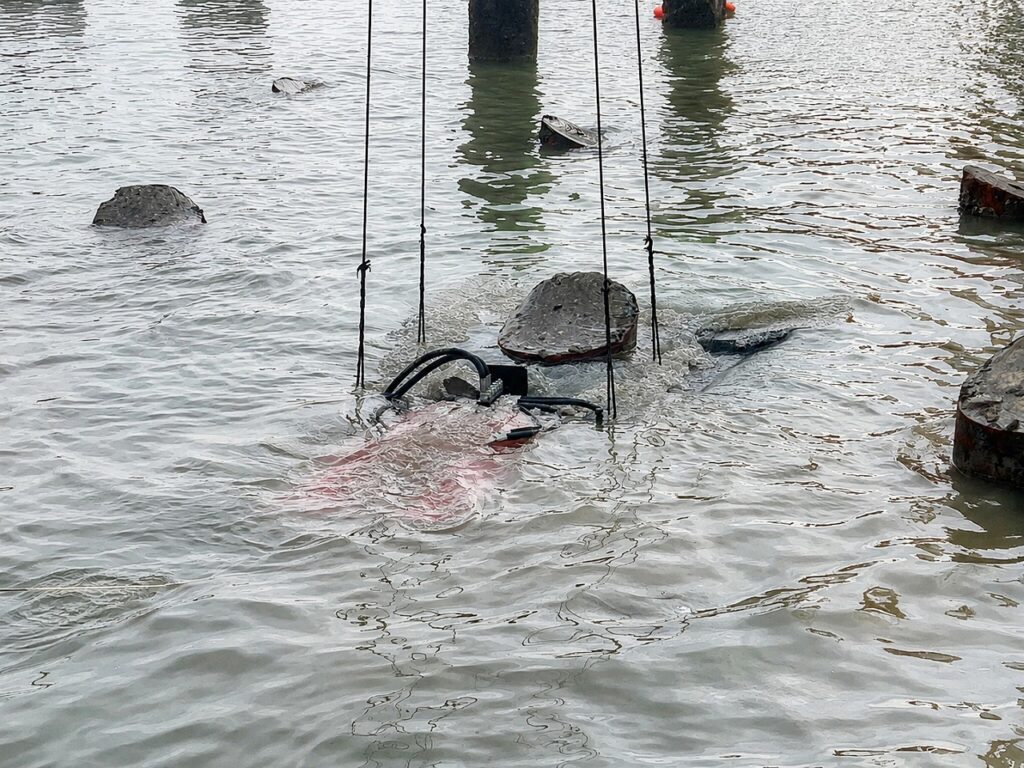
Here is how it works: the cutter is lowered onto the target pile by a crane or excavator. A hydraulic gate closes around the pile, locking it in position. The blade then drives through the pile material, completing the cut cleanly and precisely — whether the pile is vertical, horizontal, or angled, above water or deep underwater.
Core Features That Make This Pile Cutter Different
1. Direct Rebar Cutting — No Pre-Processing Needed
You do not need to separately handle steel reinforcement. The blade is designed to cut through rebar directly, which means you complete each pile in one continuous operation rather than switching tools or methods mid-cut.
2. Single-Sided Blade Operation for Confined Spaces
Many underwater cutting scenarios involve tight spacing — between adjacent piles, inside cofferdams, or against bridge piers. The BeiYi pile cutter needs only one side to access the pile and complete the cut, so you can work in areas where other machines simply cannot reach.
3. Multi-Angle Cutting Capability
Whether your piles are vertical, horizontal, or installed at an angle, this machine handles all orientations. You get the same clean cut regardless of position, giving you flexibility across diverse project geometries.
4. Powerful Hydraulic System
The 22 kW hydraulic station delivers consistent pressure at 28–32 MPa with a 700-liter oil tank for sustained operation. This means you can run continuous cutting sessions without power drop-off or overheating — critical when you are cutting dozens of piles in sequence.
5. Customizable Cutting Range
The standard BYQ-600S handles piles up to 600 × 600 mm, but BeiYi offers customization for larger or non-standard pile dimensions. If your project involves unusual pile sizes, you get a purpose-built solution rather than a compromise.
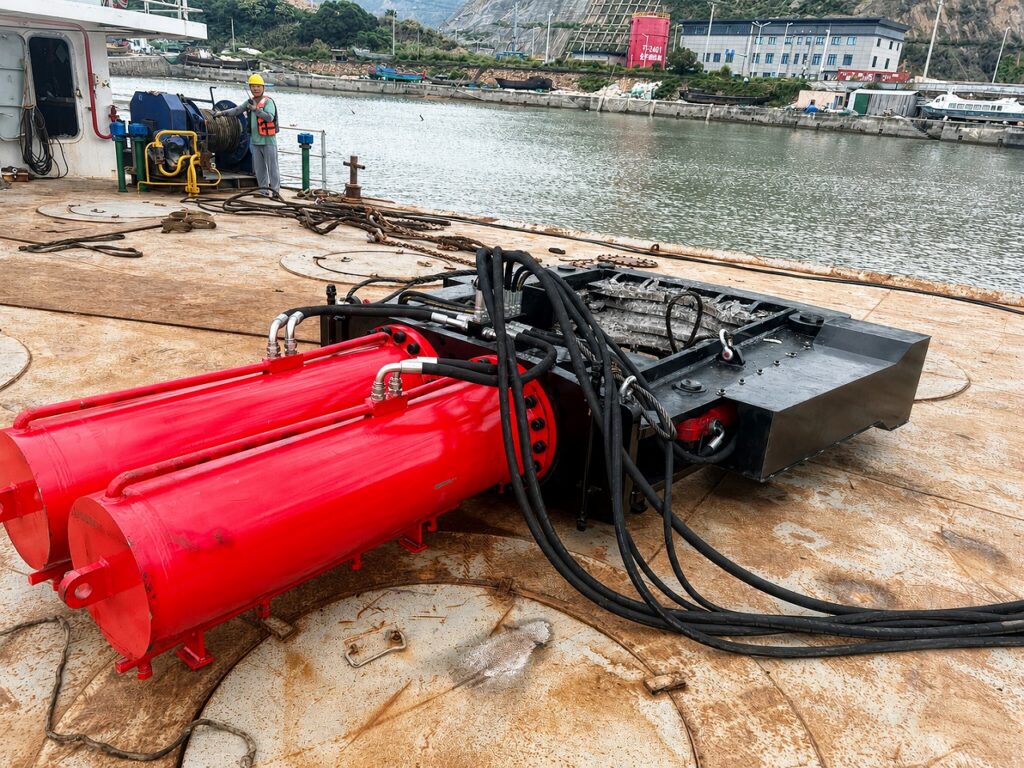
Where You Can Deploy This Solution
The versatility of this underwater pile cutter makes it suitable for a wide range of demanding environments:
Bridge demolition: Cut support piles at height or underwater without exposing workers to fall and drowning hazards.
Offshore structure removal: Decommissioning old platforms, wind farm foundations, and subsea installations where diver deployment is cost-prohibitive.
Port and harbor renovation: Remove aging piles in busy, active waterways with minimal disruption to shipping operations.
High-rise dismantling: Handle foundation pile cutting in urban environments where noise, vibration, and safety are critical concerns.
Urban construction sites: Cut piles in confined city-center locations where space and access are severely limited.
How This Solution Saves You Money
When you evaluate the underwater pile cutter for sale, the purchase price is only one part of the equation. Here is where the real savings come from:
Eliminated dive team costs: You no longer need certified commercial divers, dive supervisors, standby divers, or their support equipment. This alone can save thousands of dollars per day.
Reduced barge time: Faster cutting means less time renting barges, tugs, and marine support vessels. Projects that previously took weeks can be completed in days.
Fewer personnel on site: The machine requires a smaller crew to operate — typically a crane operator and one ground technician — compared to the large teams needed for manual cutting.
Weather independence: Because no diver is in the water, you can work through conditions that would halt traditional underwater cutting, keeping your schedule on track.
Reduced rework: Clean, precise cuts mean fewer failed inspections and less remediation work downstream.
What to Look For When You Buy a Pile Cutting Machine
If you are in the market for pile cutting equipment from a hydraulic pile cutter manufacturer, here are the decision factors that matter most:
Cutting force vs. your pile specifications: Match the machine’s crushing force and blade length to your largest, hardest piles. Do not buy a cutter that barely handles your current needs — plan for future projects too.
Sealing system quality: For deep water pile cutting, the hydraulic system’s sealing is critical. Look for multi-stage sealing designs tested for continuous underwater operation.
Customization capability: Not all piles are standard sizes. A manufacturer that offers custom cutting ranges ensures you are never forced into a workaround.
After-sales support: Look for 24/7 online service, video guidance, on-site installation, and readily available spare parts. Downtime on a marine project is far more expensive than on land.
Delivery timeline: BeiYi offers standard 20-day delivery with expedited options down to 7 days. Know your project schedule and confirm the manufacturer can meet it.
Why BeiYi Machinery Stands Out as Your Pile Cutter Supplier
With over 20 years of pile-cutting engineering experience, BeiYi Machinery has built a reputation for delivering equipment that performs in the field, not just on paper. The company holds 23 patents, ISO 9001 certification, and a 6,000-square-meter production facility. More importantly, BeiYi has a track record of real project success — from bridge demolition to offshore pile removal — backed by a service model that includes:
Free training videos for your operators
7×24 online technical support with face-to-face video guidance
Door-to-door installation and after-sales service
Abundant, easily replaceable spare parts inventory
Solid wood crate packaging for safe international shipping
Frequently Asked Questions
Q: Can the BeiYi pile cutter actually work fully underwater, and at what depths?
A: Yes. The BeiYi pile cutter is specifically engineered for both above-water and fully submerged cutting operations. The hydraulic system uses multi-stage sealing technology that has been validated in real projects at depths exceeding 30 meters. In one port renovation, the BY-PB700DWS model completed nearly 100 underwater square pile cuts with zero diver involvement. The cutter can operate at any angle — vertical, horizontal, or angled — making it suitable for virtually any underwater pile configuration you encounter.
Q: What types of pile materials can this machine cut through?
A: The BeiYi hydraulic pile cutter handles a broad spectrum of materials: reinforced concrete (including high-strength mixes), steel pipes and profiles, wood piles, and even grouted or non-grouted single and multi-string conductors. The blade is designed to cut through steel rebar directly without requiring pre-processing, which means you complete each pile in a single pass regardless of how heavily it is reinforced.
Q: How much can I expect to save by switching from diver-based cutting to this machine?
A: While savings vary by project, the three biggest cost reductions come from eliminating the dive team (including divers, supervisors, and safety personnel), reducing barge and vessel rental time due to faster cutting cycles, and cutting your on-site crew size. Many projects report overall cost reductions of 20–30% compared to traditional diver-assisted methods. Additionally, because the machine works independent of tidal windows and many weather conditions, you avoid costly schedule overruns that typically inflate marine project budgets.
Q: Can the cutting range be customized if my piles are larger than 600mm?A: Absolutely. The standard BYQ-600S model handles piles up to 600 × 600 mm, but BeiYi Machinery offers full customization for larger pile dimensions and non-standard shapes. You provide your pile specifications — diameter, shape, material, and reinforcement layout — and BeiYi’s engineering team designs a cutter configuration matched to your exact requirements. This “one-pile-one-solution” approach has been successfully applied to projects involving piles up to 1,200 mm in diameter.