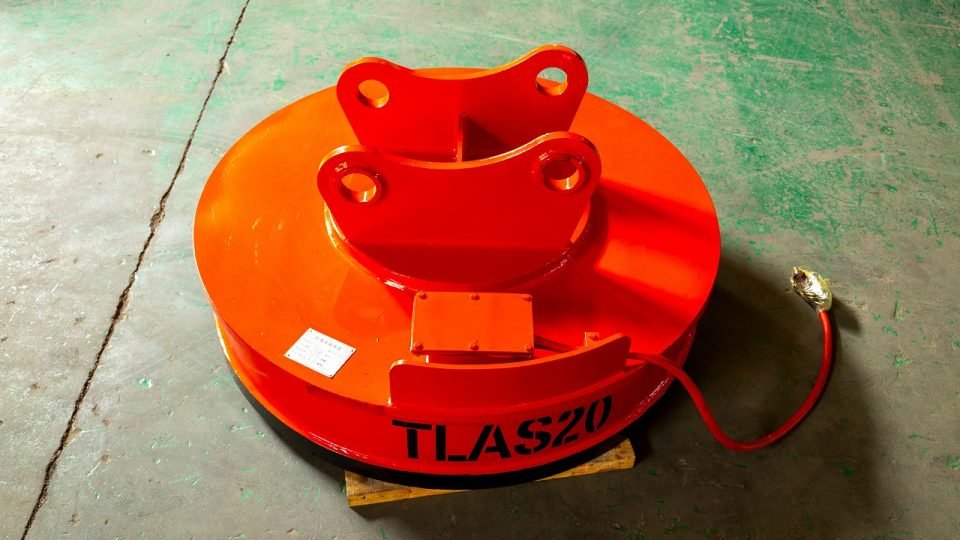
In scrap handling, steel recycling, and ferrous metal loading operations, the excavator scrap magnet is a commonly used attachment. It generates magnetic force through electromagnetic conversion to lift, move, and release metal materials efficiently. Many users want to understand the working principle of an excavator scrap magnet and how the magnetizing and demagnetizing process works. This article explains its structure, operating principle, magnetizing process, demagnetizing process, and key operating points to help users better understand how the equipment functions.
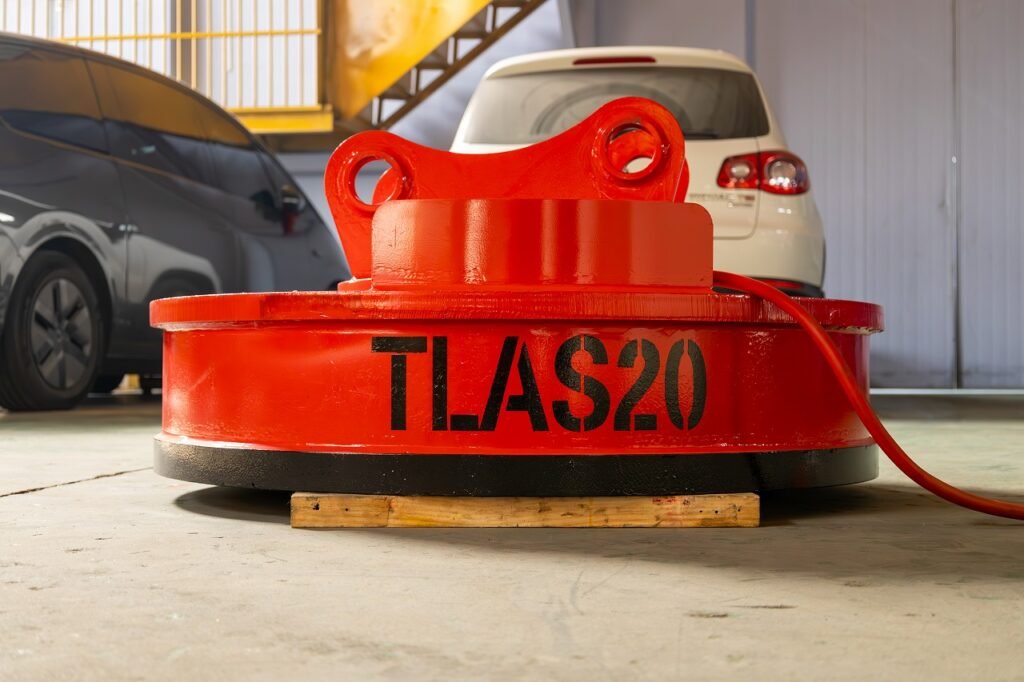
1. Basic Structure and Core Working Principle of an Excavator Scrap Magnet
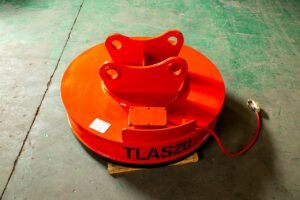
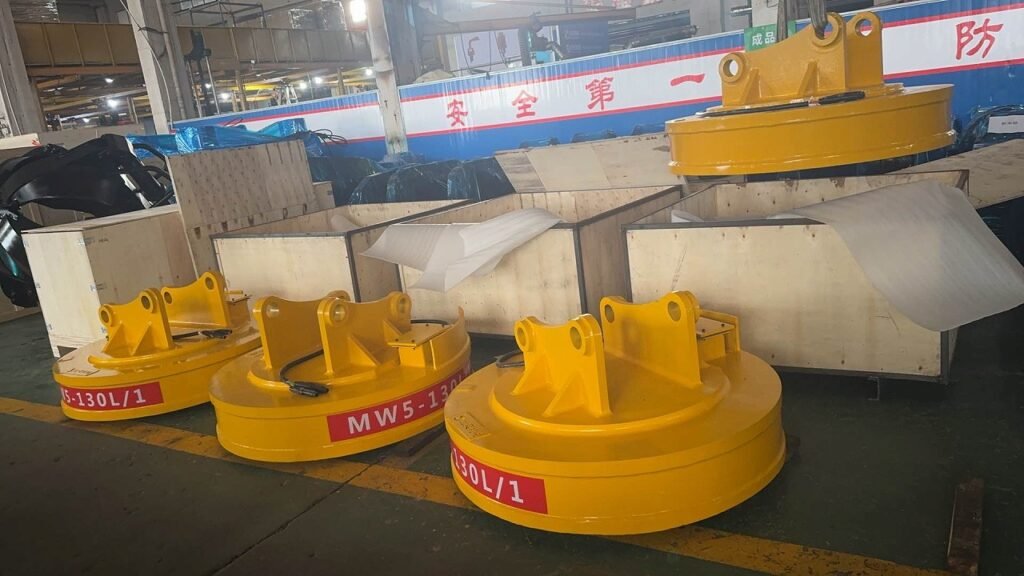
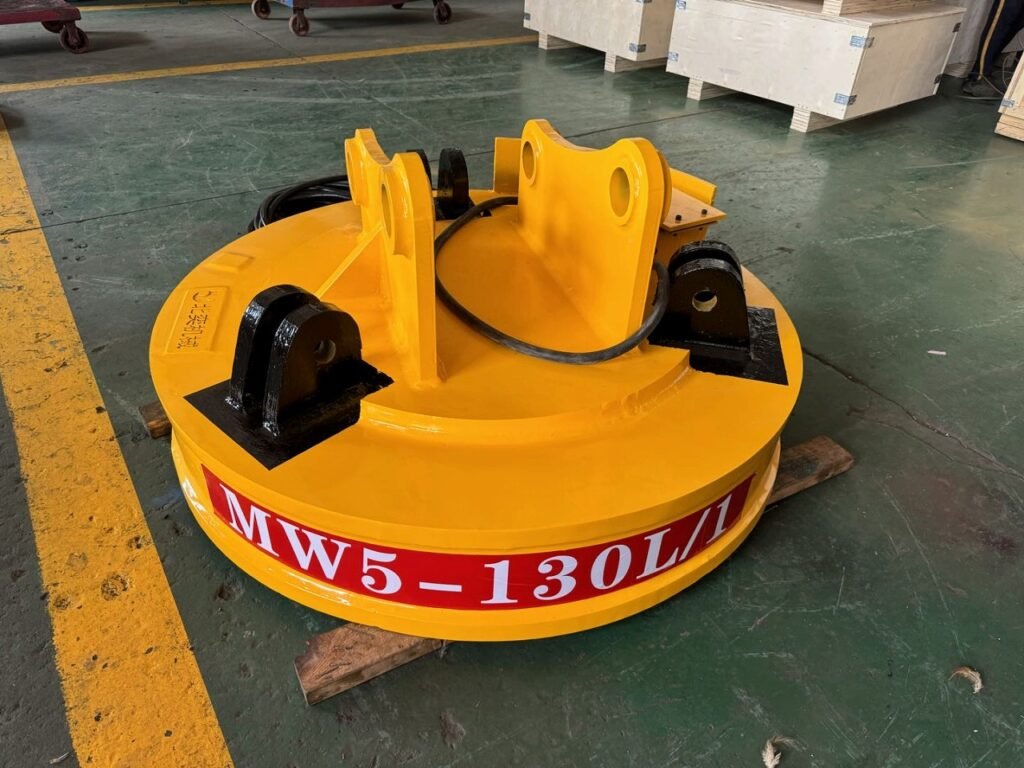
An excavator scrap magnet mainly consists of a magnet body, excitation coil, iron core, magnetic conductive plate, housing, cables, and a control system. Some models are also equipped with a generator system or other power supply components to provide stable current for the magnet.
Its operation is based on electromagnetic induction and the principle of a closed magnetic circuit. When current passes through the internal coil, a magnetic field is generated, magnetizing the iron core and magnetic conductive components. Once the magnet comes into contact with ferrous materials such as scrap steel, iron plates, steel bars, or iron shavings, the magnetic flux passes through the metal and forms a closed magnetic circuit, creating a strong holding force that allows the material to be lifted and transported.
This attachment is mainly used for handling magnetic conductive materials such as iron and steel. Non-ferrous metals and non-magnetic materials cannot form an effective magnetic circuit and therefore cannot be attracted. The magnet’s working state depends on the on-off control and direction of the current, which is also the basis of the magnetizing and demagnetizing process.
2. Detailed Explanation of the Magnetizing Process
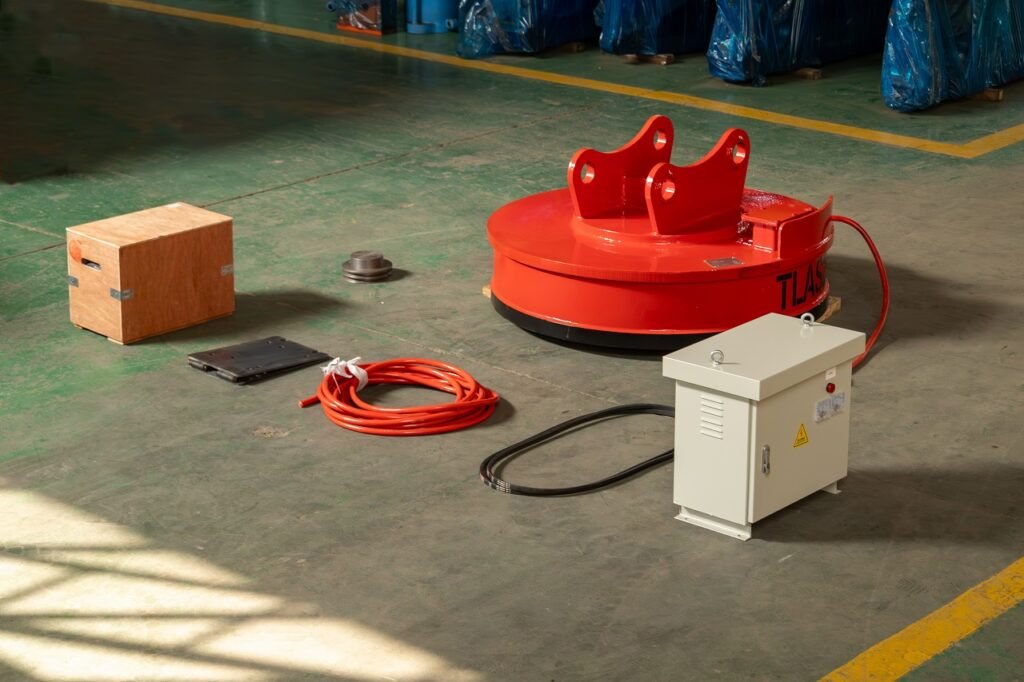
Magnetizing is the process that enables the excavator magnet to generate magnetic force and attract metal materials. This process is completed by the power supply system and controller and generally includes power input, current conversion, coil excitation, and magnetic lifting.
After the system is powered on, electrical energy is delivered to the internal excitation coil of the scrap magnet. The energized coil creates a stable magnetic field, which magnetizes the iron core and magnetic conductive plate inside the magnet. When the magnet is placed over scrap steel or other ferrous materials, the materials become part of the magnetic circuit. The magnetic flux passes through the contact area and generates a strong attraction force, allowing the metal to be firmly lifted.
During operation, the current remains stable so that the magnetic field can be continuously maintained. This ensures reliable lifting, loading, unloading, and sorting performance in scrap yards, steel plants, ports, and recycling sites. In practical applications, the control system is usually designed with interlocking protection to keep the magnetizing and demagnetizing functions from being activated at the same time.
3. Detailed Explanation of the Demagnetizing Process
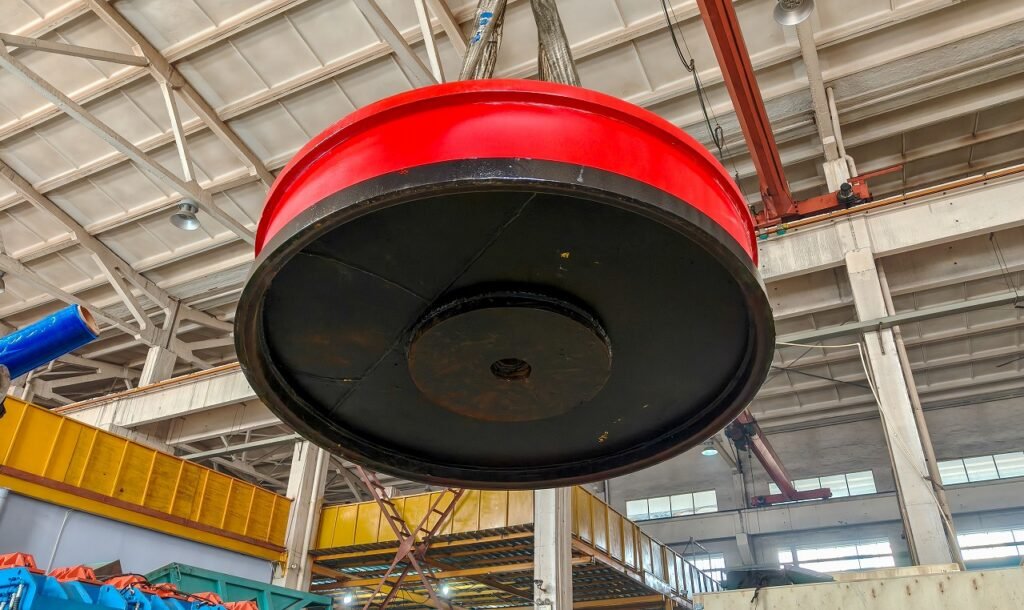
After the lifting or unloading work is completed, the metal materials must be released smoothly. If the power is simply cut off, some residual magnetism may remain in the magnet or the lifted material, which may affect the release performance. Therefore, a proper demagnetizing process is important.
During demagnetization, the control system applies a reverse current or uses a corresponding demagnetizing control method to offset the residual magnetic force in the magnetic circuit. In some systems, the magnetic field is reduced gradually so that the remaining magnetism drops to a very low level. As the magnetic force disappears, the attached metal materials are released from the magnet surface.
A controlled demagnetizing process helps prevent metal pieces from remaining attached to the magnet and improves unloading efficiency. After demagnetization is completed, the excavator magnet returns to a non-magnetic state and is ready for the next working cycle.
4. Key Points of the Magnetizing and Demagnetizing Process
1. Stable power supply
A stable power supply is essential for maintaining reliable magnetic force. Stable current output helps ensure consistent lifting performance during scrap handling operations.
2. Residual magnetism control
The purpose of demagnetization is to reduce residual magnetic force and allow materials to be released cleanly and efficiently.
3. Suitable applications
Excavator scrap magnets are widely used in scrap yards, metal recycling plants, steel mills, ports, and demolition sites for handling scrap steel, iron plates, steel bars, and other ferrous materials.
4. Working status check
After magnetization, operators can confirm that the material is firmly attracted before lifting. After demagnetization, the metal should separate smoothly from the magnet without obvious residual attraction.
The excavator scrap magnet works by converting electrical energy into magnetic force through electromagnetic induction and a closed magnetic circuit. During magnetization, the magnetic field is established to attract and lift ferrous materials. During demagnetization, the residual magnetic force is removed so that the material can be released smoothly. Understanding the working principle of an excavator scrap magnet and its magnetizing and demagnetizing process helps improve operation efficiency, reduce handling problems, and ensure more reliable scrap loading and unloading.