During urban redevelopment, renovation of old residential communities, and upgrading of industrial plants, a large number of reinforced concrete buildings require safe and efficient demolition.
Compared with traditional rough demolition methods, modern engineering projects place higher requirements on the following aspects:
- ✔ Construction efficiency
- ✔ Structural controllability
- ✔ Low vibration and low disturbance
- ✔ Personnel safety protection
- ✔ Reduction of labor costs
Especially in scenarios involving 10–20 cm thick reinforced concrete slabs and dense beam-column structures, traditional equipment often struggles to balance efficiency and safety.
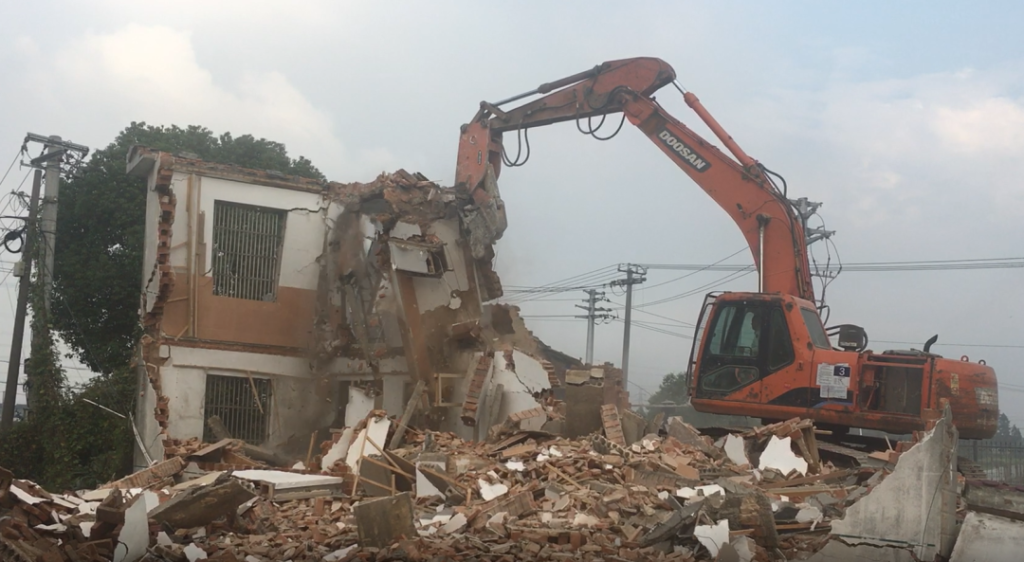
Construction Challenge Analysis
In actual building demolition processes, common issues include:
1️⃣ High Slab Structural Strength
Reinforced concrete slabs are typically 10–15 cm thick with dense internal reinforcement. Traditional breakers can only crush the concrete, while the steel bars still require manual cutting.
2️⃣ Vibration Impact on Surrounding Structures
Breakers operate at high impact frequencies, which can affect retained structures or adjacent buildings.
3️⃣ Large Secondary Cleanup Workload
After concrete crushing, residual reinforcement requires secondary processing, increasing labor costs.
4️⃣ High Personnel Safety Risks
Close-range manual demolition presents risks such as flying debris and structural collapse.
Technical Solution
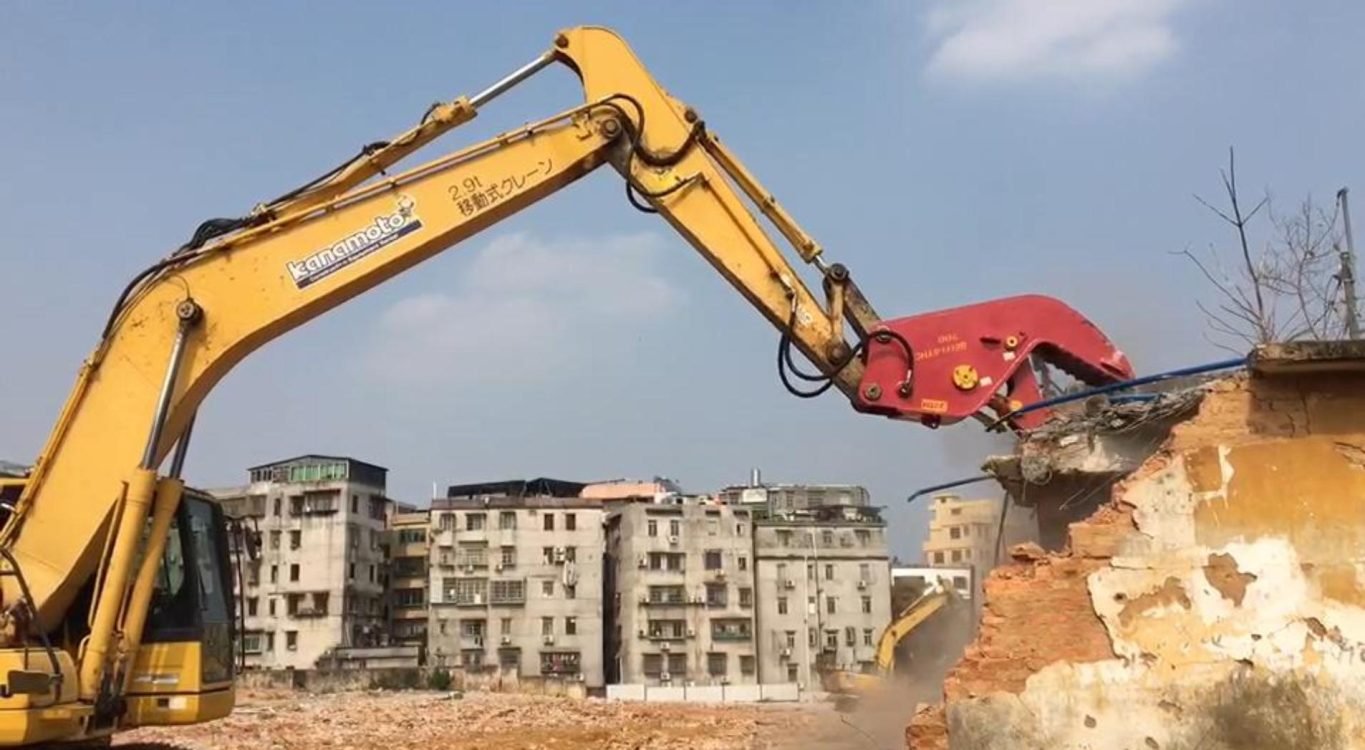
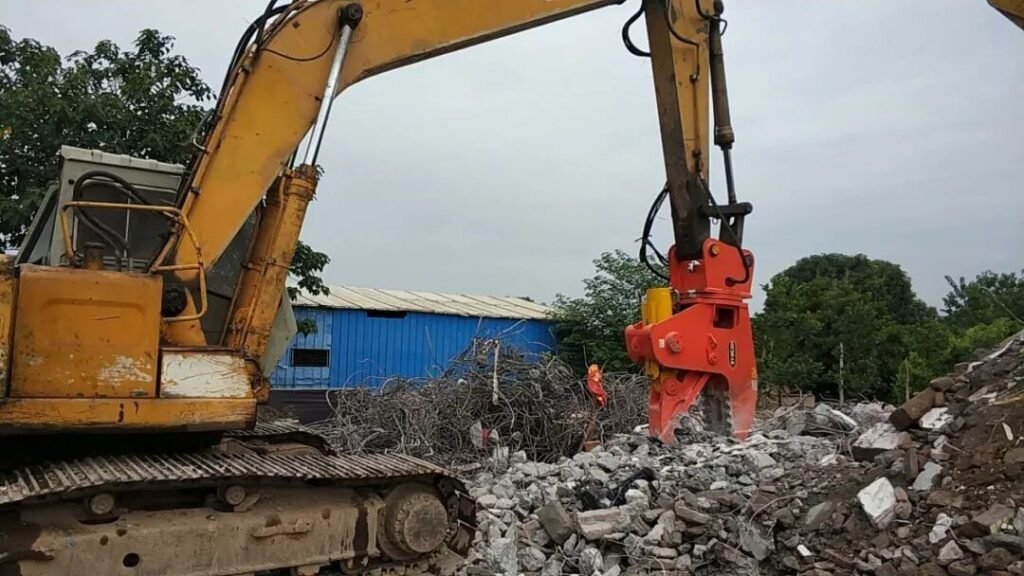
To address the above issues, the use of a rotating hydraulic pulverizer is recommended. Driven by the excavator’s hydraulic system, it enables simultaneous crushing and cutting of reinforced concrete structures.
BY-HC250RT Hydraulic Rotating Pulverizer
Key Technical Parameters
- Maximum opening: 751 mm
- Maximum crushing force: 80 kN
- 360° hydraulic rotation
- Suitable for 20–30 ton excavators
Construction Process
- Excavator positioning
- Enclosing the structural component with the jaw
- Hydraulic closure for cutting
- Simultaneous crushing of concrete and cutting of reinforcement
- Sectional demolition, progressing floor by floor
This method avoids impact vibration and enables targeted demolition.
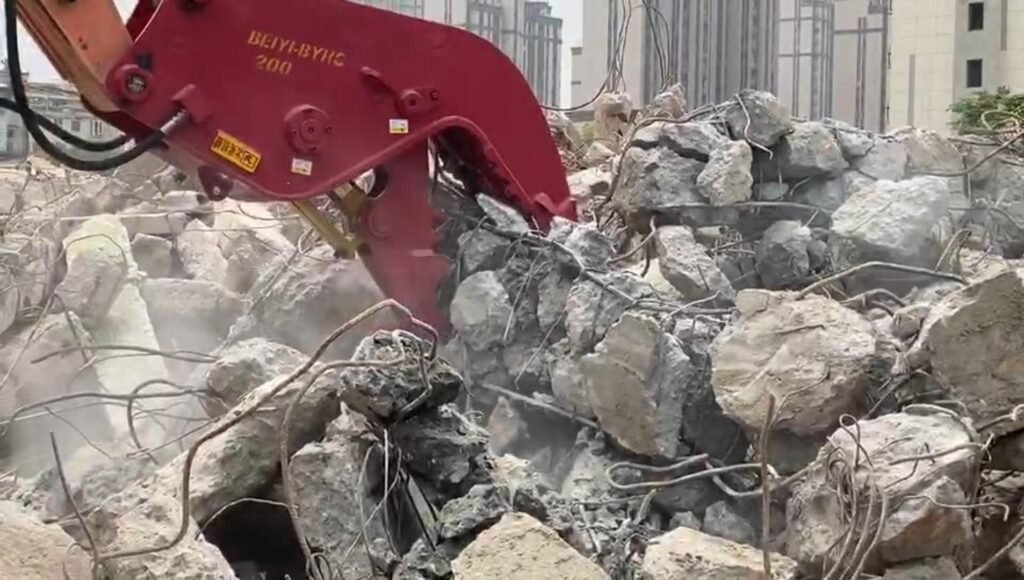
Advantages
✅ 1. Improved Demolition Efficiency
- Single-floor demolition time reduced by approximately 50%
- 10 cm slab demolition reduced to approximately 3 minutes per section
✅ 2. Reduced Labor Input
- Operating personnel reduced by approximately 30–40%
- Reduced labor intensity
✅ 3. Enhanced Safety Level
- Remote excavator operation
- Reduced close-range manual work
- Effectively lowers the risk of debris-related injuries
✅ 4. Precise Control of Demolition Scope
- Locally controllable demolition
- Suitable for scenarios requiring structural retention
- Reduced risk of unintended damage
Application Scenarios of the Rotating Hydraulic Pulverizer
- Urban old building renovation
- Urban village demolition
- Industrial plant demolition
- Commercial complex reconstruction
- Partial structural renovation projects
- Demolition projects in dense building areas
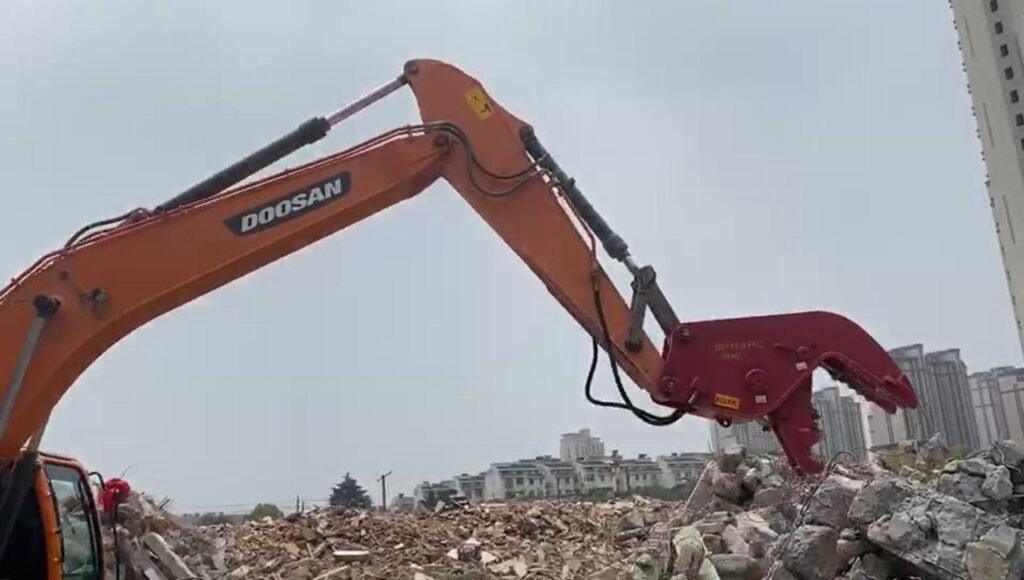
Comparison with Traditional Equipment: How Much Stronger Is the Pulverizer?
| Evaluation Dimension | Traditional Breaking Method | Hydraulic Pulverizer Solution |
|---|---|---|
| Demolition Efficiency | Baseline | Increased by approximately 50% |
| Labor Allocation | 8 workers | 5 workers |
| Safety Risk | High | Significantly reduced |
| Secondary Processing | Required | Generally not required |
Overall construction time can be shortened by 3–5 days (depending on project scale).
Hydraulic rotating pulverizers provide an efficient, controllable, safe, and economical engineering solution for modern building demolition. Through mechanized synchronized crushing and cutting, high-quality demolition of reinforced concrete structures can be achieved, meeting the construction requirements of urban redevelopment and industrial upgrading projects.