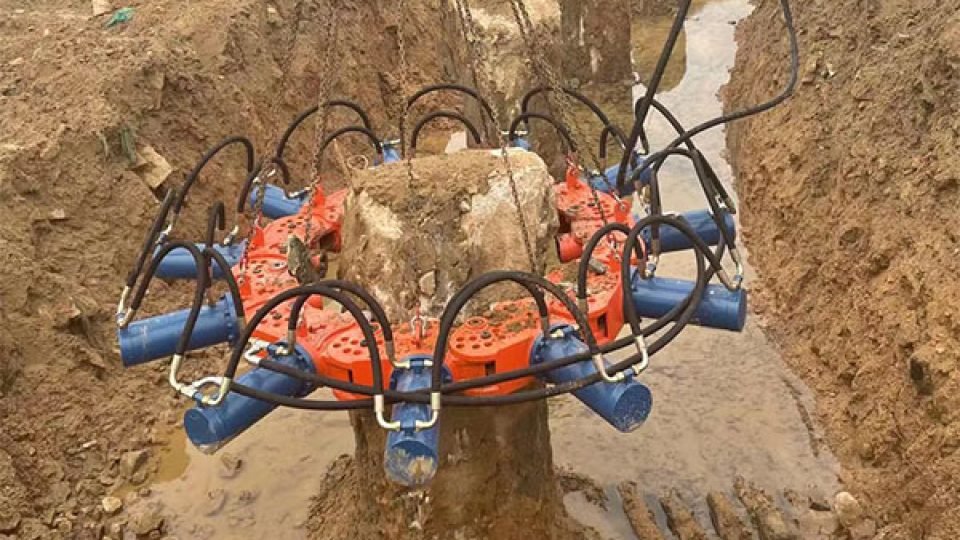
Application Value of Hydraulic Pile Breakers in Modern Foundation Projects
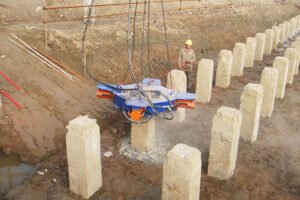
In bridge reconstruction, metro construction, and urban renewal projects, the reliable and stable removal of underground concrete piles is a critical task in foundation engineering. Traditional manual breaking methods using pneumatic hammers are relatively inefficient and generate high noise levels, while blasting demolition is often restricted by environmental and regulatory limitations.
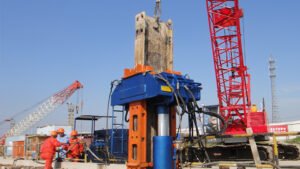
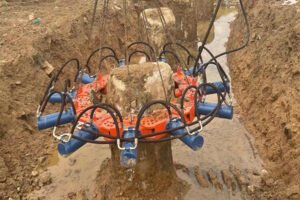
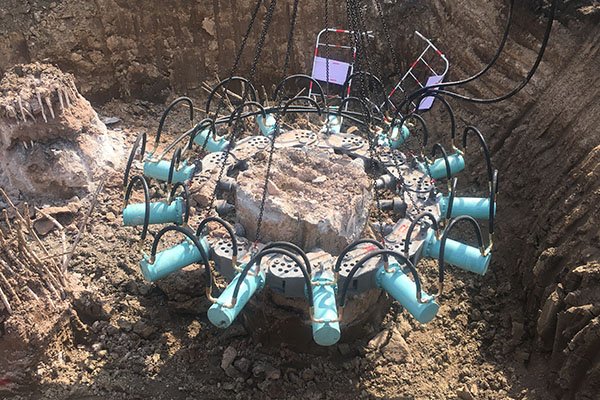
The introduction of hydraulic pile breakers has provided a practical alternative for such projects. By utilizing hydraulic drive systems and controllable impact force, the equipment breaks down concrete piles efficiently. This contributes to improved construction productivity, reduced environmental impact, and enhanced operational stability.
This article explains the working principle of hydraulic pile breakers—from power conversion to force transmission—and illustrates how systematic engineering design makes them a commonly used demolition solution in modern foundation construction.
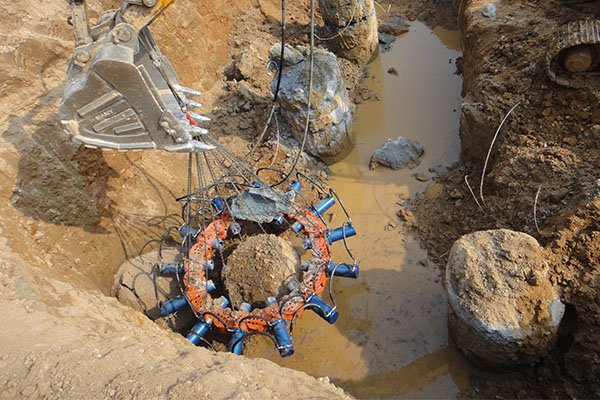
Core Principle: Working Mechanism of the Hydraulic Pile Breaker
The ability of a hydraulic pile breaker to crush concrete piles relies on a controllable energy conversion and transmission system. Its working process can be understood as the coordinated operation of power supply, execution mechanism, and control system.
1. Hydraulic Power Generation
The hydraulic power system initiates operation when the engine (diesel or electric motor) drives the hydraulic pump. Mechanical energy is converted into hydraulic energy, generating high-pressure oil flow.
The output flow rate and pressure of the hydraulic system directly influence the crushing capacity of the equipment.
2. Hydraulic Actuation and Impact
High-pressure oil is delivered to the hydraulic cylinders inside the breaker. The oil pressure drives the piston to perform high-speed reciprocating motion.
The piston converts hydraulic energy into mechanical impact energy, which is then transmitted through the chisel rod to the localized area of the concrete pile.
3. Control System Regulation
The entire process is regulated by the control system. Through hydraulic valve groups and, in some configurations, electronic control units, the system can adjust impact frequency, force, and rhythm.
This enables the equipment to adapt to different concrete strengths while maintaining stable operation.
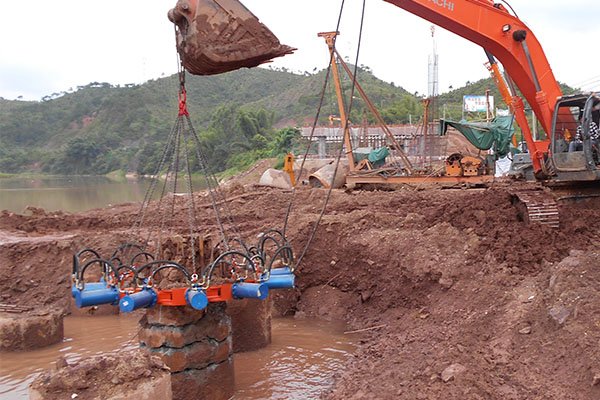
Engineering Basis for Reliable Crushing: From Mechanism to Performance
The crushing effectiveness of a hydraulic pile breaker results from the integration of mechanical principles and material characteristics.
Hydraulic Force Amplification
Based on Pascal’s principle, pressure applied to a confined liquid is transmitted uniformly in all directions. By designing different piston surface areas within the hydraulic cylinder, the system can amplify force output at the chisel tip, generating sufficient impact force for concrete breaking.
Optimized Energy Transmission
Modern hydraulic pile breakers are typically designed with high-rigidity structural components. This ensures that more impact energy generated by the piston is transmitted directly to the chisel tip and pile body, reducing energy loss caused by structural vibration.
Adaptation to Concrete Material Properties
Concrete has high compressive strength but relatively low tensile strength. Hydraulic pile breakers generate stress waves and micro-cracks within the concrete through repeated impact.
Under tensile and shear stresses, these micro-cracks propagate, gradually breaking the material. This mechanism enables effective crushing with balanced energy consumption and operational efficiency.
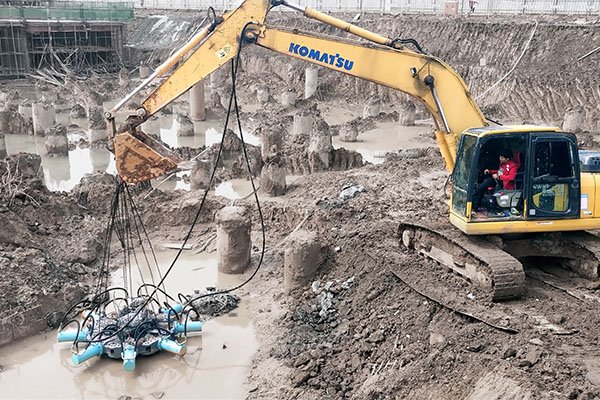
Construction Application and Operational Considerations
Understanding the working principle is only the foundation. Proper application and standardized operation are essential for achieving reliable performance.
Pre-Construction Preparation
Before operation, site inspection and parameter adjustment should be conducted. Equipment configuration and working mode should be selected according to pile diameter, concrete strength, reinforcement layout, and other project conditions.
Operational Techniques
Operational technique directly affects efficiency and stability. It is recommended to begin breaking from the outer edge of the pile head or structurally weaker sections.
During operation:
- Keep the chisel rod perpendicular to the breaking surface
- Work in sections progressively
- Avoid localized overload
Operators should adjust rhythm and parameters according to equipment feedback to maintain coordinated performance.
Equipment Maintenance
Regular inspection of hydraulic oil condition and wear of key components is necessary. Scheduled maintenance helps maintain working efficiency and prolong service life.
Development Outlook: Technological Evolution of Hydraulic Pile Breakers
With increasing environmental protection requirements and higher demands for construction efficiency, hydraulic pile breaker technology is evolving toward energy-saving performance, lower noise levels, and intelligent control systems.
Beiyi Machinery closely follows industry trends and integrates energy efficiency and environmental considerations into product design. Through continuous technical improvement, the company aims to enhance overall equipment performance and support construction projects in achieving a balance between efficiency and environmental impact, contributing to the steady development of foundation engineering technology.