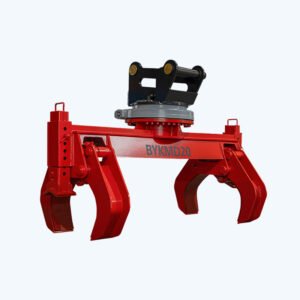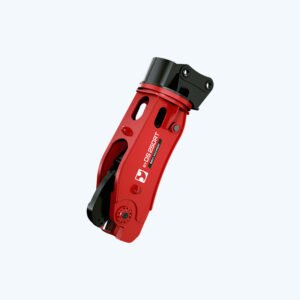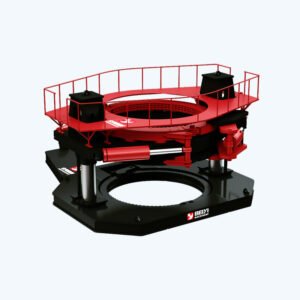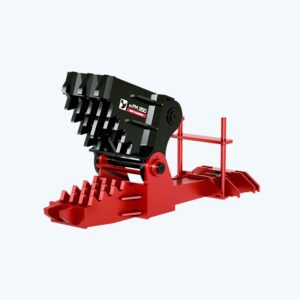
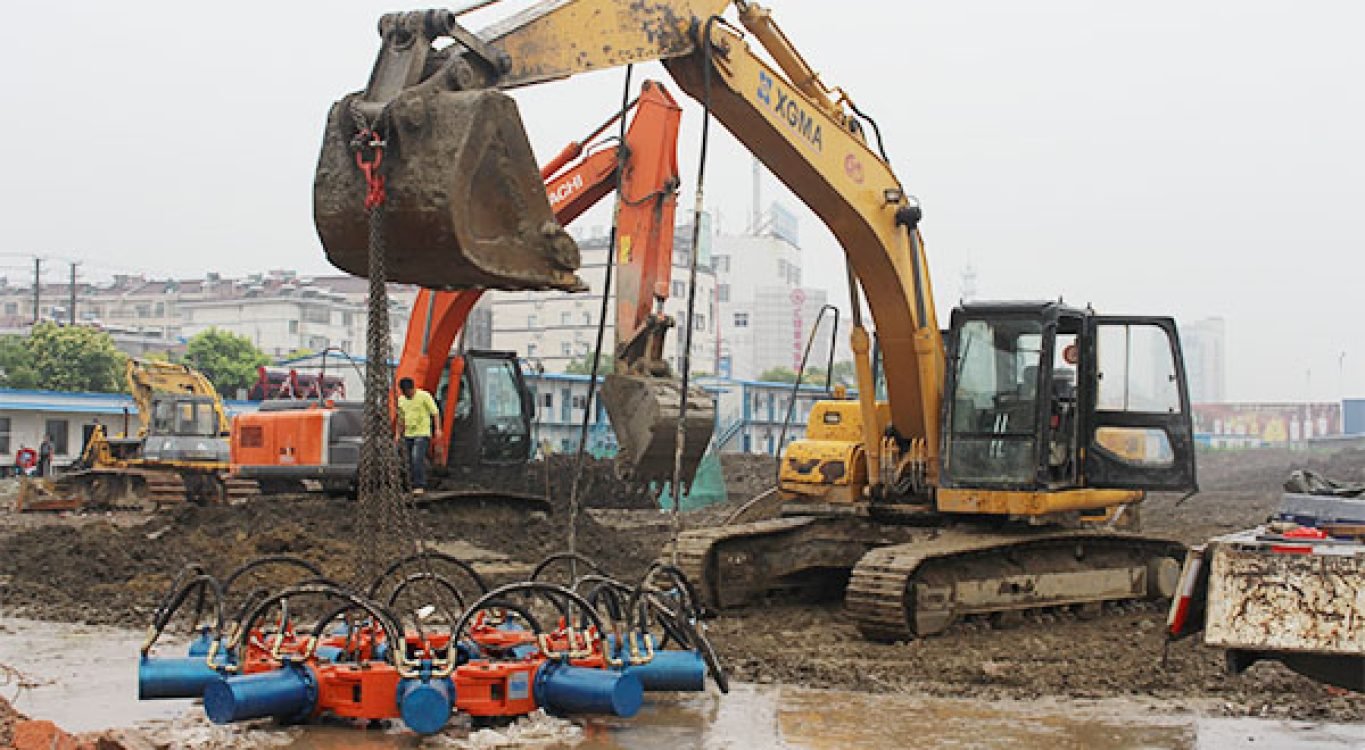
In urban renewal and infrastructure upgrade projects, removing deeply embedded reinforced concrete piles presents a major engineering challenge. This article explores how hydraulic pile breakers, with advantages in efficiency, safety, and environmental control, are replacing blasting and pneumatic methods to become a preferred solution in modern pile demolition projects.
The Challenge: Removing Deep Reinforced Concrete Piles
In dense city centers, aging buildings must give way to new developments. At busy transportation hubs, old bridge piers must be removed to make space for elevated structures.
Behind these scenarios lies a common technical challenge: how to safely and efficiently dismantle deeply embedded reinforced concrete pile foundations.
Traditionally, blasting created severe vibration risks, while manual pneumatic breaking was slow, labor-intensive, and costly.
Today, a more controlled and engineering-oriented solution has become widely adopted — the hydraulic pile breaker. It represents the shift from “rough demolition” to “precision structural deconstruction.”
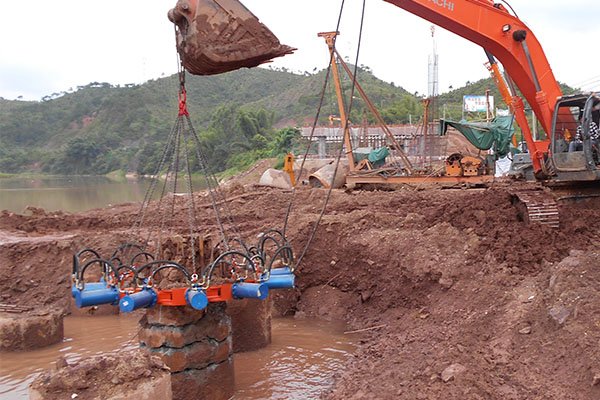
Limitations of Traditional Pile Breaking Methods
Before hydraulic pile breakers became widely used, traditional methods faced three major challenges:
1. Safety Risks
Blasting poses serious threats to surrounding buildings, underground utilities, and public safety. In urban sensitive areas, it is often prohibited. Flying debris and uncontrolled cracking create significant project risks.
2. Low Efficiency
Manual pneumatic breaking relies heavily on labor. Removing a large-diameter cast-in-place pile may take several days. Labor intensity is high, schedules are unpredictable, and project costs increase.
3. Environmental Impact
Continuous noise, dust pollution, and vibration frequently lead to complaints and regulatory penalties. Large volumes of construction waste further increase disposal costs.
As urban management standards continue to tighten, these issues have become increasingly unacceptable.
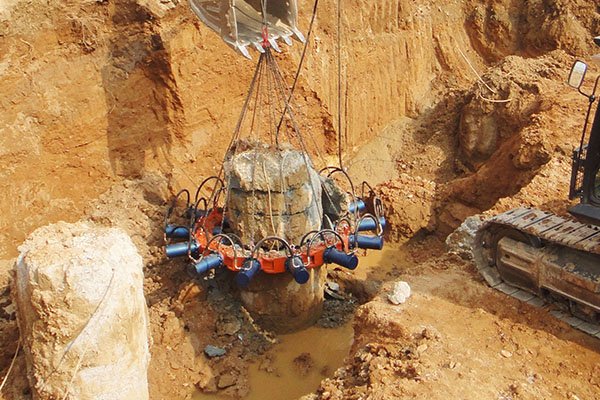
How Hydraulic Pile Breakers Redefine Pile Demolition
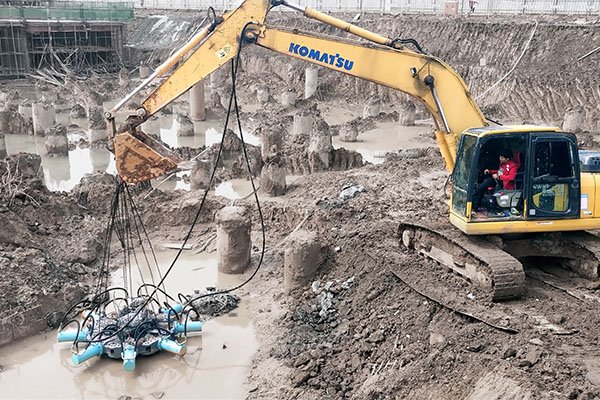
Hydraulic pile breakers are typically mounted on excavator arms. Powered by the carrier machine’s hydraulic system, the breaker drives an internal piston that strikes the chisel rod at high frequency.
The impact energy is transmitted directly into the concrete pile body.
The fundamental difference from traditional methods lies in controlled mechanical impact and localized force application.
The process can be understood as follows:
High-energy hydraulic impact is applied from the pile head downward, progressively disintegrating and separating the reinforced concrete structure. Once the concrete is fragmented, the exposed steel reinforcement can be easily cut and recycled.
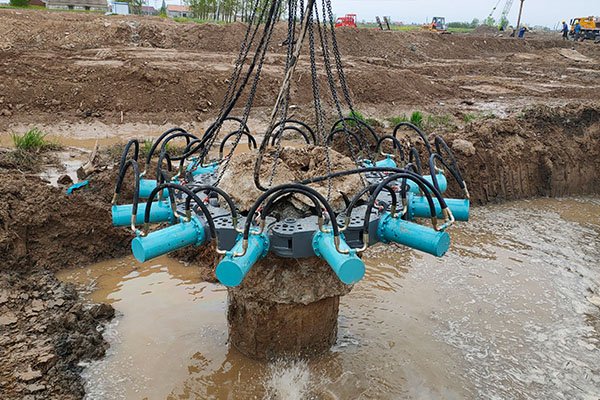
Core Advantages
Controlled and Safe Operation
Impact vibration is localized and adjustable. Operators work remotely from the excavator cabin, significantly improving personal safety and minimizing surrounding structural impact.
High Efficiency and Cost Optimization
A medium-sized hydraulic pile breaker can match the productivity of dozens of workers using pneumatic tools. Tasks that previously required a week may now be completed within one or two days, reducing labor costs and project duration.
Environmentally Adaptable
Noise and dust levels are significantly lower than blasting and large-scale pneumatic operations. With additional dust suppression measures, projects can better comply with urban environmental regulations.
Strong Adaptability
Hydraulic pile breakers can handle:
- Building foundation piles
- Retaining piles
- Bridge and dock piles
- Underwater pile foundations
- Large-diameter cast-in-place piles
- Precast pipe piles
By selecting appropriate chisel types and adjusting hydraulic power, various soil and geological conditions can be addressed.
Typical Application Scenarios
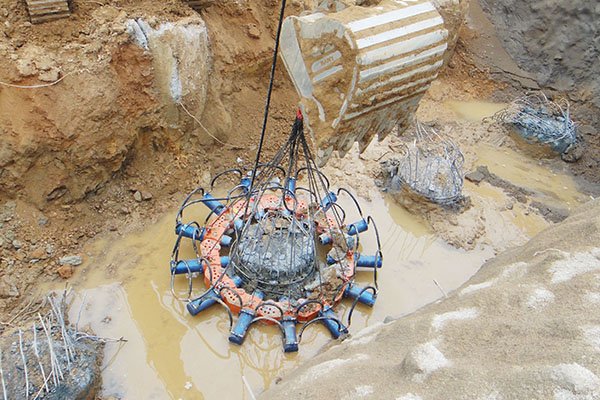
Hydraulic pile breakers have become standard equipment in the following projects:
Urban Building Renovation
In confined spaces with strict protection requirements for nearby structures.
Transportation Infrastructure Upgrades
Highways, railways, metro stations, and bridge reconstruction projects where efficiency and safety are critical.
Industrial Facility Demolition
Systematic dismantling of heavy-duty equipment foundations.
Sensitive Environments
Near hospitals, schools, historic buildings, or complex underground utility networks.
When Should You Consider a Hydraulic Pile Breaker?
You should seriously evaluate this solution if your project involves:
- Densely populated or built-up areas
- Tight construction schedules
- Strict environmental regulations
- Large-diameter piles (>800 mm)
- High-strength reinforced concrete
- The need to reduce total lifecycle costs
Engineering Progress Through Technology
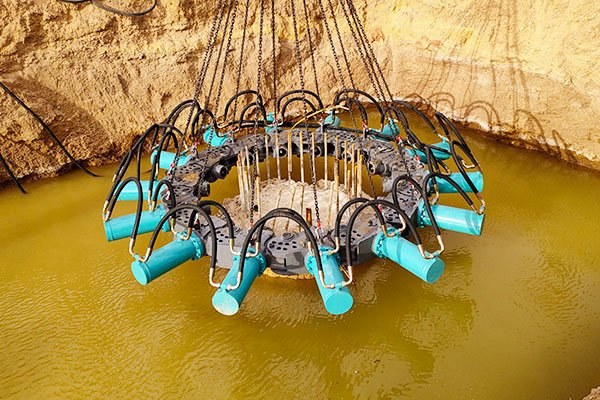
The widespread adoption of hydraulic pile breakers represents more than equipment improvement — it reflects a transformation in construction philosophy.
It marks the transition from labor-intensive demolition to technology-driven precision engineering.
As an early practitioner in hydraulic pile breaking technology, Beiyi Machinery has focused on this field for over a decade. We understand that every pile demolition task involves strict requirements for safety, timeline, and cost control.
Therefore, we provide not only equipment, but a comprehensive solution — from pre-project assessment and equipment matching, to delivery, operator training, and long-term maintenance support.
Choosing Beiyi hydraulic pile breakers means working with a reliable partner to ensure stable and efficient project execution.