With the acceleration of urban renewal and infrastructure upgrades, municipal engineering projects increasingly demand higher construction efficiency and stronger environmental compatibility.
Pile extraction, as a critical process in municipal construction, directly affects project timelines and construction quality.
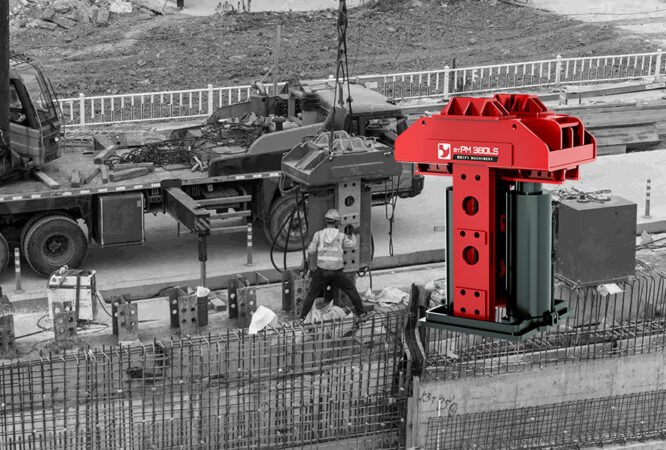
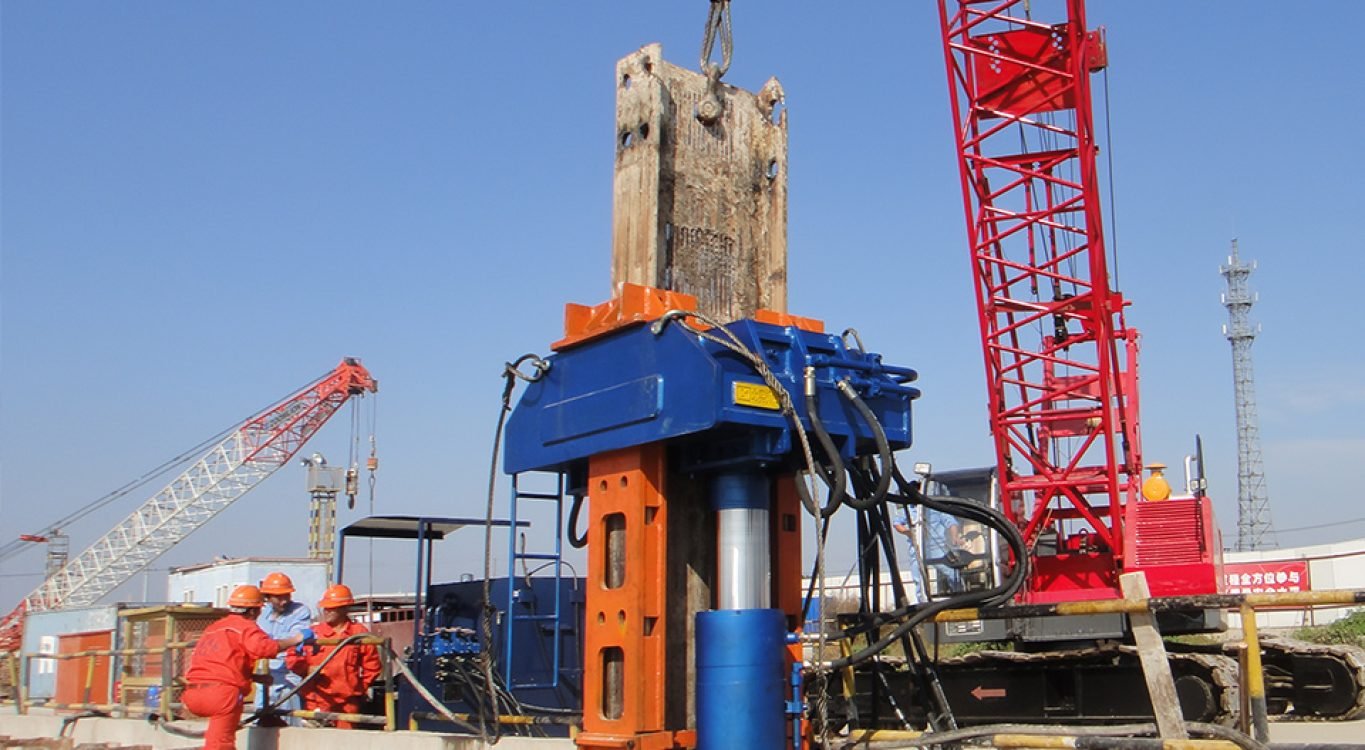
Vertical hydraulic pile extractors, with strong pulling capacity, easy operation, and environmentally friendly performance, have become a mainstream choice in municipal pile removal projects. This article analyzes their core application scenarios and provides reference guidance for equipment selection.
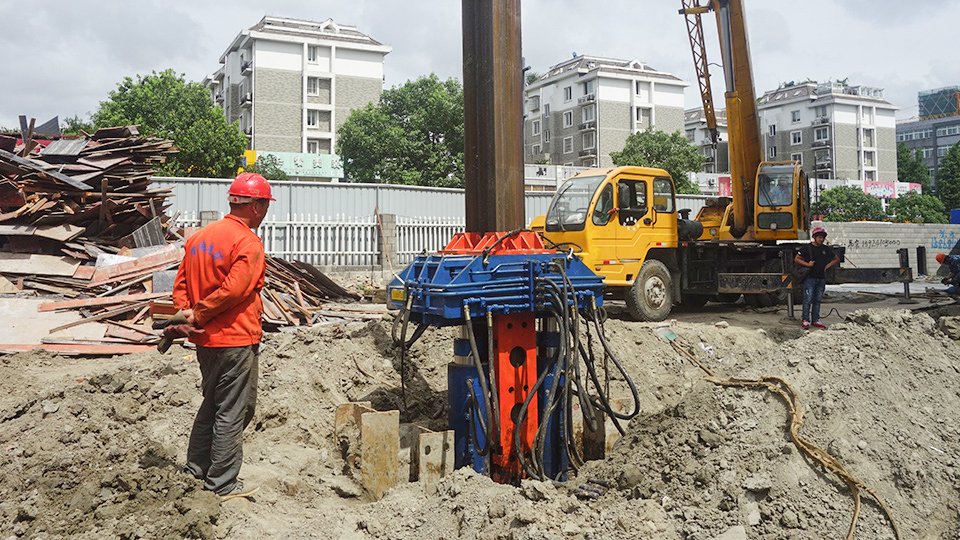
Core Requirements of Municipal Pile Extraction and Equipment Adaptability
Municipal construction environments are complex and diverse.
Projects are often located in dense urban areas with:
- Close proximity to buildings
- Complex underground pipelines
- Strict vibration and noise restrictions
- Limited working space
Traditional extraction equipment typically suffers from high vibration, excessive noise, low efficiency, and disturbance to surrounding soil layers.
Vertical hydraulic pile extractors operate based on hydraulic transmission principles. Through controlled valve systems, they deliver high pulling force with low vibration and reduced noise.
They can adapt to various pile types, including:
- Steel sheet piles
- H-beams
- Steel pipe piles
- Casing piles
Integrated structural design simplifies lifting operations. Some models feature detachable chassis systems, allowing operation in dense pile groups and confined spaces.
Wireless remote control systems and dual-cylinder speed regulation further improve efficiency and reduce labor demand.
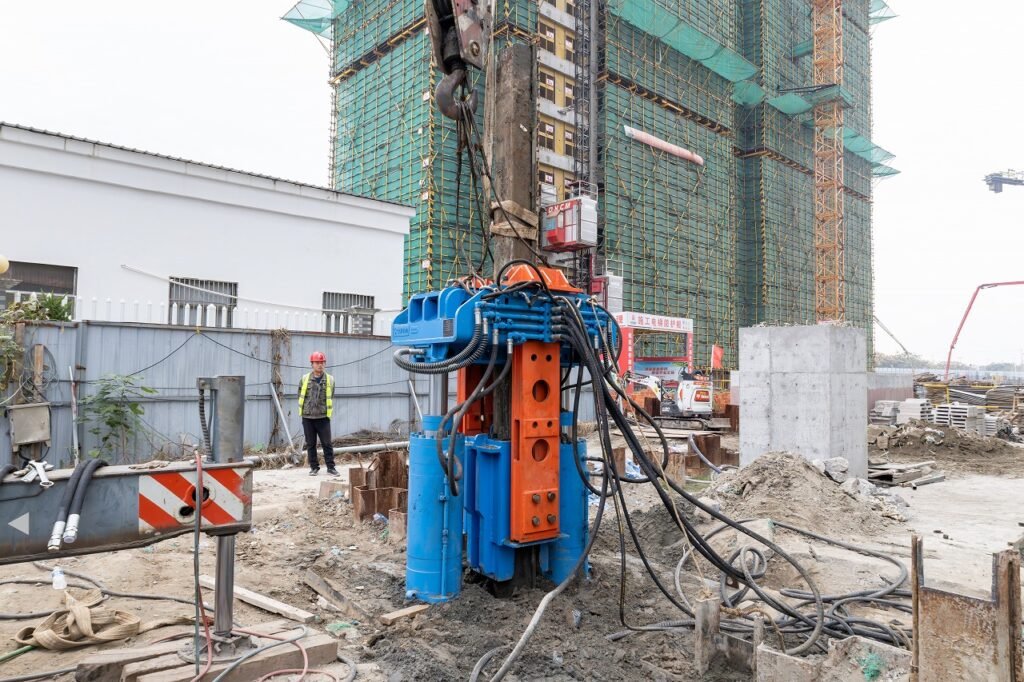
Core Application Scenarios in Municipal Engineering
1. Urban Rail Transit Construction
In metro and tunnel projects, retaining piles are essential during excavation and must be removed after completion.
These environments typically involve limited space and strict control over ground disturbance. Vertical hydraulic pile extractors provide controlled extraction with minimal soil settlement impact.
2. Municipal Road and Pipeline Renovation
Road widening, rehabilitation, and underground utility installation often require removal of existing foundation piles.
Compared with traditional equipment, vertical hydraulic extractors significantly improve efficiency.
For example, extracting a 20-meter H-beam may take 40 minutes using conventional machines, while vertical hydraulic models may complete the task in approximately 15 minutes, achieving daily extraction volumes exceeding 60 piles.
Low vibration minimizes risk to adjacent road surfaces and underground pipelines.
3. River Regulation and Hydraulic Projects
In river dredging and embankment reinforcement projects, steel sheet piles are commonly used and later removed.
Vertical hydraulic pile extractors operate without slurry overflow and meet environmental protection requirements, making them suitable for water-adjacent construction.
4. Urban Redevelopment and Foundation Reconstruction
In demolition and foundation upgrading projects, removal and recycling of old piles are key challenges.
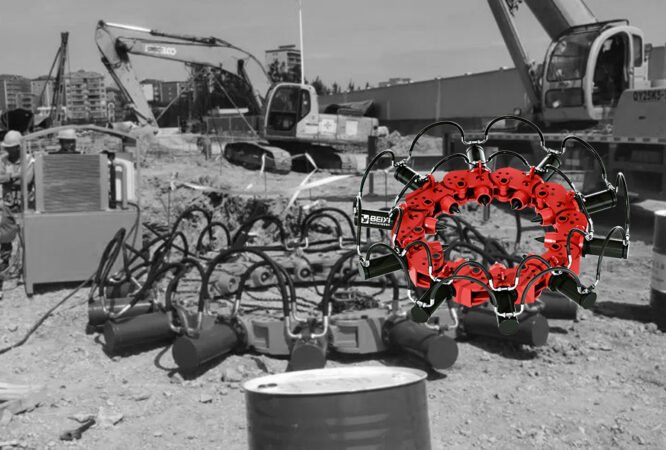
Combined with full-rotation casing cutting technology, vertical hydraulic pile extractors enable controlled removal with high recovery rates of steel and concrete materials, reducing construction waste.
5. Temporary Support and Emergency Projects
In bridge cofferdam construction and underground corridor projects, temporary support piles require efficient removal.
The equipment adapts to clay, sand, and gravel soil conditions. Adjustable pulling speed and pressure ensure stable extraction without affecting surrounding structures.
Rapid deployment capability also supports municipal emergency response projects.
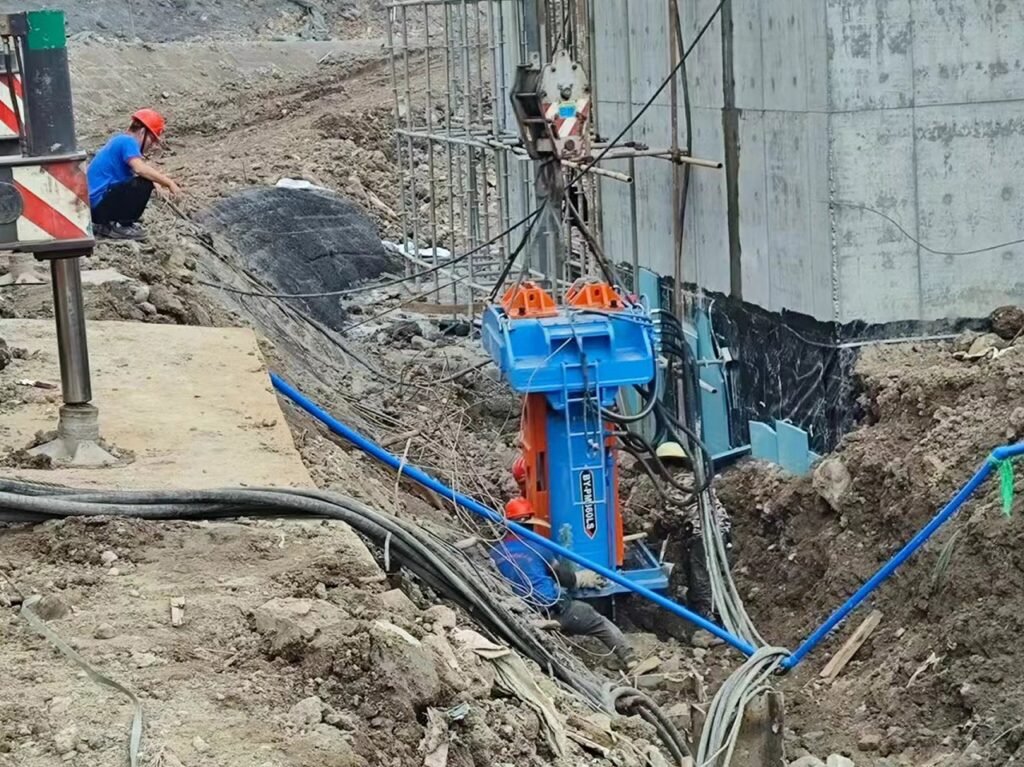
Equipment Selection Guidelines for Municipal Projects
Selecting the appropriate vertical hydraulic pile extractor requires attention to:
1. Pile Type and Specification
Match pulling force and clamping force with pile dimensions and material type.
For example, removing 500–800 mm H-beams may require a 300-ton rated extraction force model, while larger specifications may require customization.
2. Site Adaptability
- Confined sites: choose integrated lifting or detachable chassis models
- Urban core areas: prioritize low-vibration, low-noise systems
- Water-adjacent projects: select leakage-resistant designs
3. Technical Parameters
Evaluate rated pressure, extraction speed, and daily output capacity.
Advanced configurations such as electronic flow control systems and dual safety valves improve operational stability.
4. Brand and Service Support
Choose manufacturers with mature technology and reliable after-sales service to minimize downtime during construction.
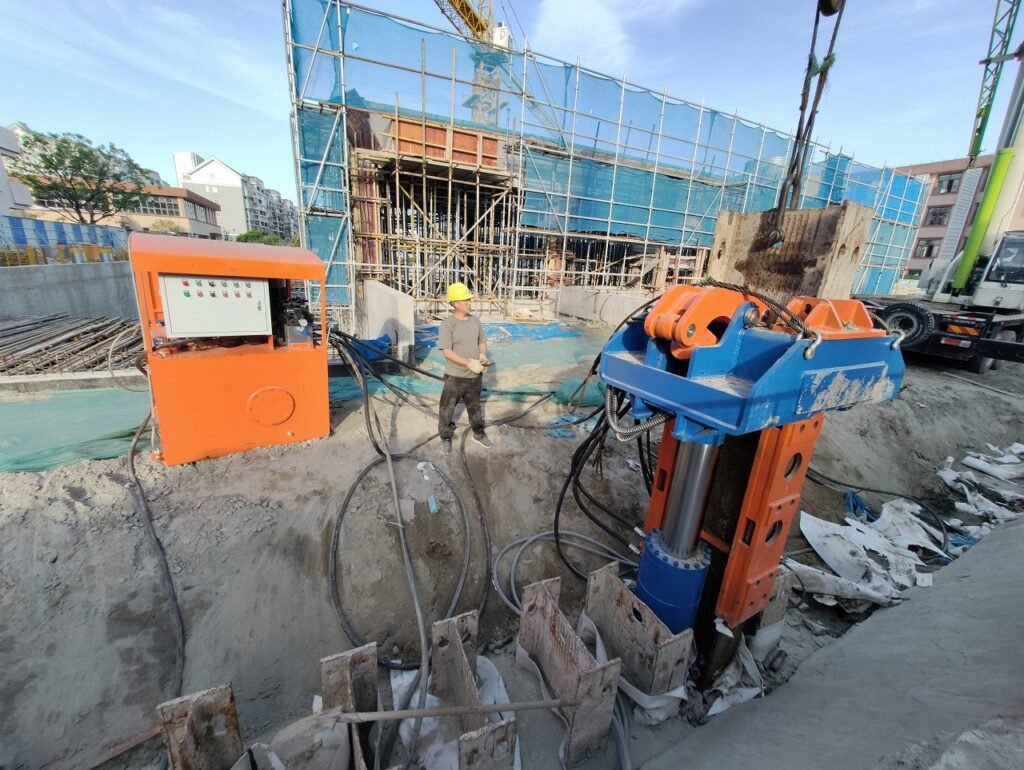
As municipal engineering standards continue to rise, the application scope of vertical hydraulic pile extractors will expand further.
With strong pulling performance, environmental adaptability, and efficiency advantages, vertical hydraulic pile extractors play an important role in metro construction, road renovation, river regulation, and urban redevelopment projects.
Proper equipment selection based on project conditions ensures improved construction efficiency and supports sustainable urban infrastructure development.